


Stakeholder Communication Plan: How to Build One That Actually Drives Change
Change initiatives don’t fail because of flawed strategy documents or insufficient budget. They fail because people weren’t brought on the journey. And people who aren’t brought on the journey tend to find their own path, which rarely leads where you intended.
A stakeholder communication plan is the tool that prevents this. More than a schedule of emails and updates, it’s a strategic document that helps you understand who needs to hear what, when and why, so that the right messages reach the right people at the right moment. Used well, it builds the trust that makes change possible. Used poorly, or not at all, it leaves a vacuum that rumour and resistance are only too happy to fill.
What Is Stakeholder Communication?
Stakeholder communication is the deliberate, structured process of engaging everyone who has a stake in your change initiative, whether they’re directly impacted, hold decision-making influence or simply need to remain informed. It’s proactive rather than reactive; planned rather than ad hoc.
The distinction matters. Reactive communication, responding to concerns as they emerge, is like bailing water from a leaking boat. A well-designed stakeholder communication plan addresses the leak before you’ve even set sail.
Why a Stakeholder Communication Plan Matters
The value of a stakeholder communication plan sits on several levels simultaneously.
At its most fundamental, the plan reduces risk and resistance to change. Misunderstandings about the scope, pace or purpose of a change are among the most common reasons initiatives stall or revert. Clear, consistent messaging prevents these misunderstandings from taking root. It also creates a shared reference point for project teams, so that leaders, sponsors and communications colleagues are all working from the same script rather than improvising in their own directions.
Beyond risk reduction, a well-constructed plan creates genuine alignment. It becomes the space where departments and senior leaders agree on the key messages they’ll carry into their parts of the organisation: the benefits being delivered, the goals being pursued, the milestones the business will reach and when. That alignment is rarely spontaneous. It needs to be built.
Perhaps most importantly, the plan shapes how people feel about change. The goal of your communications isn’t always the same. Sometimes you’re building awareness; sometimes you’re educating; sometimes you’re managing a moment of crisis; sometimes you’re simply sustaining momentum through a long programme. Each goal calls for a different approach, and a robust plan makes those distinctions visible and manageable.
Start With Stakeholder Mapping
You cannot communicate effectively with people you don’t understand. This is why stakeholder mapping is the essential foundation of any communication plan, and why it should happen before you draft a single message.
Stakeholder mapping gives you a structured picture of everyone connected to your initiative, categorised by their level of influence and their level of interest. That categorisation then tells you how closely each group needs to be managed, what depth of communication they require and how frequently they need to hear from you.
Crucially, strong stakeholder analysis also surfaces preferences. Some of your stakeholders will absorb information best through structured briefings or town halls; others will want written updates they can read at their own pace; others respond to peer conversation rather than top-down messaging. Understanding these preferences before you build your plan means your communications are more likely to land, and less likely to be ignored.
We’ve written in detail about how to approach this process in our stakeholder mapping tools article, including how to categorise stakeholders by influence and interest. If you haven’t completed that analysis before starting your communication plan, that’s the right place to begin.
What a Stakeholder Communication Plan Should Include
A stakeholder communication plan is only as useful as it is specific. Vague plans produce vague outcomes. At minimum, your plan should capture five things.
The audience
Who you’re communicating with, ideally drawn directly from your stakeholder map. Note that not every stakeholder identified in your mapping exercise will need to be targeted by every part of your communications plan, and for particularly complex initiatives, it may make sense to write separate plans for different audience segments.
The messages
What information needs to be communicated to each audience, and what you want them to think, feel or do as a result. This is where your change narrative lives, and it’s worth investing time here. The narrative should be consistent across all channels and connect your change initiative to broader organisational goals. It gives your communications an emotional hook, not just an informational one.
The channels and formats
How those messages will be delivered. The full toolkit includes intranet posts, video updates, email communications, town halls (virtual or in-person), workshops, events and more. Channel choice should be driven by your audience analysis; what works for a frontline team in a warehouse operates differently from what works for a senior leadership population.
The timeline
When communications will be delivered, mapped against the milestones and deliverables of your change programme. A good timeline also accounts for messaging fatigue; if your organisation is running multiple initiatives simultaneously, your stakeholders have a finite appetite for communications, and your plan should respect that.
Roles, responsibilities and measurement
Who owns each communication, and how you’ll know whether it’s working. We’ll come to measurement in more detail shortly.

How to Write a Stakeholder Communication Plan: A Step-by-Step Approach
Step One: Complete Your Stakeholder Mapping
As noted, this is the starting point. Without it, you’re making assumptions about your audiences, and assumptions are expensive in the context of change management.
Step Two: Audit Existing Channels and Communications
Before you design anything new, understand what already exists. What campaigns or communication rhythms are already running? What do your brand guidelines require? What does the analytics data from previous initiatives tell you about what your audiences actually engage with? This audit prevents duplication, identifies gaps and ensures your plan integrates with the broader communications landscape rather than creating noise.
Step Three: Define Your Goals
Every communication within your plan should have a clear purpose. At the plan level, you should be able to articulate the outcomes you’re working toward: raising awareness among a particular group, shifting perceptions, prompting a specific action like completing a survey or attending a workshop, or sustaining confidence during a period of uncertainty. These goals can be written as SMART objectives, and all should connect upward to the goals of the wider change programme and the organisation.
Step Four: Identify and Segment Your Audiences
Draw from your stakeholder map and decide which audiences your plan will address. Consider whether a single plan will serve all audiences, or whether certain groups, executives, people managers, frontline employees, customers, warrant their own targeted approach.
Step Five: Agree Key Messages and Tactics
Working from your goals and audience analysis, develop the messages you need to deliver and choose the tactics that will carry them most effectively. Repetition is your friend here. Key messages need to be reinforced across multiple channels and touchpoints throughout the life of the project; a single email announcing a change is rarely sufficient. Think about how the same core message can be expressed through different formats and voices at different moments.
Step Six: Assign Roles and Responsibilities
Communication plans fail when ownership is unclear. Map each communication to a named owner, whether that’s a project team member, a senior leader, a line manager, a marketing colleague or someone from an internal communications function. Where budget is involved, make that explicit too.
Step Seven: Build Your Timeline
Align your communications schedule with the milestones and deliverables of your change project. Build in review points. Check for conflicts with other organisational activity. And where possible, sequence your communications so that each one builds logically on the last, rather than arriving as a series of disconnected announcements.
Step Eight: Define How You’ll Monitor and Evaluate
A communication plan without measurement is a plan you can’t improve. Define your key metrics before you start, whether that’s email open rates, survey completion, attendance at sessions, sentiment data from pulse surveys or the volume and nature of questions coming in through feedback channels. Build regular reporting into your project meeting rhythm so the plan can be adjusted as feedback arrives and circumstances evolve.
Best Practices for Stakeholder Communication
Bring Stakeholders In Early
The single most common communication mistake in change programmes is engaging stakeholders too late. By the time many organisations begin communicating, key decisions have already been made without input from the people most affected. Influential stakeholders in particular should be involved from the earliest stages of planning. Their input builds ownership; their ownership builds advocacy; their advocacy is often worth more than any campaign you could design.
Align Leaders Before You Communicate Widely
Before your communications reach the broader organisation, secure alignment from the leaders, project peers and key influencers who will be visible during the change. Inconsistent messaging from leaders is one of the fastest ways to undermine trust. When your senior people speak with one voice, it signals stability and confidence.
Build a Consistent Change Narrative
A change narrative is more than a set of talking points. It’s the through-line that connects every communication in your plan, from the initial announcement to the final milestone celebration. It explains why the change is happening, what it means for the people affected and where the organisation is headed. When every communication connects back to this narrative, your programme feels coherent rather than fragmented.
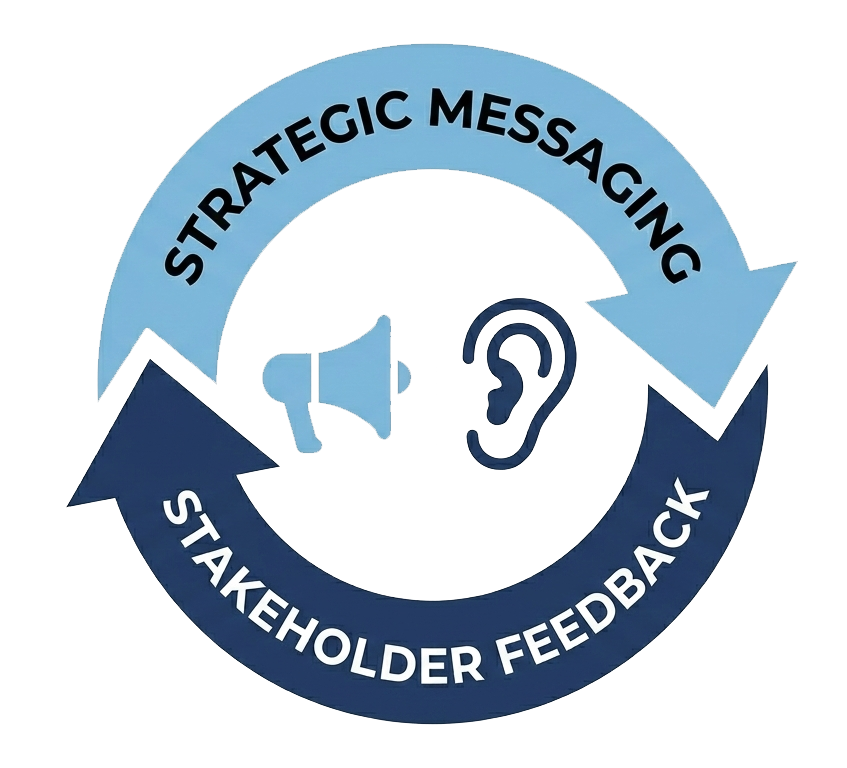
Make Communication Two-Way
The most effective communication plans create channels for feedback as deliberately as they create channels for broadcasting. Feedback tells you what’s landing and what’s generating resistance; it surfaces concerns you hadn’t anticipated; it gives your stakeholders a sense of agency rather than passivity. Building genuine two-way communication into your plan means you can adapt continuously, rather than discovering problems only when they’ve become entrenched.
Track, Report and Adapt
Communication planning is not a one-time exercise. Make monitoring and reporting a regular feature of your project governance. As you receive data and feedback, adjust your tactics. What isn’t working should be changed without ego; what is working should be reinforced and amplified.
Stakeholder Communication Plan Template
To transform your strategy into a tangible roadmap that prevents rumours and builds genuine alignment, use the following stakeholder communication plan template to define exactly who needs to hear what, when and through which channel.
| Phase / Pillar | Audience Segment | Key Message(s) | Channel & Format | Timeline/Frequency | Owner | Success Metric |
| Example: Awareness | Frontline Staff | The ‘Why’ behind the change and how it affects daily tasks. | Town Hall & Weekly Newsletter | Launch Week; then Bi-weekly | Project Lead | 70% Email Open Rate; Q&A Volume |
How to Use This Template
To ensure this document remains a “strategic tool” rather than just a schedule, keep these principles in mind:
- The Narrative Hook: In the Key Message column, don’t just list facts. Ensure there is an emotional hook that connects to the broader organisational goals.
- The Audit Check: Before filling in the Channel column, refer back to your audit (Step Two). Use the channels your audience already engages with rather than creating “noise.”
- The Two-Way Factor: Ensure at least one channel for every audience segment allows for Stakeholder Feedback. This prevents the “vacuum” where rumours grow.
- Messaging Fatigue: When filling in the Timeline, look at the density of communications. If the frequency is too high, you risk the “finite appetite” for communication mentioned.
A Final Thought on Stakeholder Communication Plans
There’s a principle in architecture: form follows function. A stakeholder communication plan that’s built around a genuine understanding of your audiences, their needs, their preferences and their concerns will look very different from one that’s built around internal convenience. The former takes more effort to create. It also works.
The organisations that manage change most successfully treat communication as a core project discipline, not an afterthought. They invest in understanding their stakeholders before they craft a single message, they align their leaders before they address their workforce, and they listen as much as they broadcast. When communication is this intentional, it doesn’t just inform people about change; it brings them with you.
Get in touch
If you’re leading a change initiative and want to develop a stakeholder communication strategy that genuinely brings people with you, we’d welcome the conversation. We work alongside leadership teams to design and deliver communication plans that are grounded in real stakeholder insight, aligned to your change goals and built to last beyond the life of the project.
Get in touch to tell us where you are in your change journey, and we’ll explore together what good communication planning could look like for you.
Stakeholder Communication Plan FAQs
Stakeholder communication is the deliberate process of engaging everyone connected to a change initiative, whether they’re directly impacted, hold influence over its success or simply need to stay informed. The key word is deliberate. Stakeholder communication isn’t the same as sending occasional updates; it’s a planned, ongoing discipline that ensures the right people receive the right messages at the right time. Done well, it builds the trust that makes change possible. Done poorly, it leaves a vacuum that rumour and resistance are only too happy to fill.
Imagine an organisation implementing a new technology platform. A stakeholder communication plan for this initiative might include executive briefings to secure senior sponsorship, manager toolkits to help leaders have confident conversations with their teams, company-wide town halls to explain the “why” behind the change, and targeted email updates for the employees most affected by the transition. Each communication is tailored to its audience, timed to the project’s milestones and connected by a consistent narrative. That joined-up approach, rather than any single message, is what effective stakeholder communication looks like in practice.
Writing a stakeholder communication plan follows a clear sequence. Start by mapping your stakeholders, understanding who they are, how much influence they hold and what their communication preferences look like. Audit your existing channels and past campaigns to understand what’s already in play. Define the goals your communications need to achieve, whether that’s building awareness, shifting perceptions or prompting a specific action. Identify which audiences your plan will address, agree the key messages for each, and choose the channels and formats best suited to deliver them. Assign clear ownership for every communication, map your timeline against the project’s milestones, and build in measurement from the start so you can track what’s working and adjust what isn’t.
A robust stakeholder communications plan should capture five essentials: your audiences, your messages, your channels and formats, your timeline and your measurement framework. Audience definition tells you who you’re speaking to. Messages tell you what they need to hear and what you want them to think, feel or do as a result. Channels and formats determine how those messages will be delivered, whether through town halls, email, video, workshops or intranet content. The timeline aligns your communications with project milestones and accounts for messaging fatigue. And measurement defines how you’ll know whether your communications are landing, so the plan can be continuously improved rather than set and forgotten.
Stakeholders in a communication plan are anyone who has a stake in your change initiative. That includes people who are directly impacted by the change, those who hold influence over whether it succeeds, and those who simply need to remain informed. In practice, this could mean senior leaders, people managers, frontline employees, project team members, customers, suppliers or regulators, depending on the nature and scale of the initiative. Stakeholder mapping helps you categorise these groups by their level of interest and influence, so you can determine how closely each needs to be managed and what depth of communication they require.
The most effective stakeholder communication strategies share several qualities. They start early, bringing stakeholders into the conversation from the first stages of planning rather than presenting decisions already made. They use a consistent change narrative that connects every communication to the broader goals of the initiative and the organisation. They match channel and format to audience, recognising that what works for a senior leadership team operates differently from what works for a frontline workforce. They build in two-way communication, creating genuine channels for feedback and adapting the plan as new challenges emerge. And they repeat key messages deliberately across multiple touchpoints throughout the life of the project, because a single announcement is rarely enough to shift understanding or build commitment.
Stakeholder communication skills are the capabilities that enable leaders and project teams to engage their audiences effectively throughout a change initiative. They include the ability to analyse stakeholder needs and preferences, to craft clear and compelling messages, to choose the right channels and moments for communication, and to listen actively and respond to feedback. Equally important are influencing skills, the ability to build trust, manage resistance and align leaders around a shared narrative, and the judgement to know when to communicate proactively rather than waiting for questions to arise. These skills sit at the intersection of strategy and relationship-building, and they’re among the most valuable a change leader can develop.